


Starting Out as an Indie Game Dev
Learning to be an indie (independent) game developer is not an easy task. In fact it’s not really a task, calling it such does not do it any justice it is more of a journey of learning and self-discovery than any one task. As a long time retro gamer it has always been a dream of mine to make my own game. Having played countless numbers of game over the nearly 40 years that I’ve been gaming means that I have a lot of retro games influences and ideas floating around inside my head. Many times I have thought to myself, I wish this or that idea could be a game. You would think that at this point everything that people can possibly think of has been tried already but that is not true at all.
The RPG Game Genre
There are many, many concepts for games that simply have not been tried or even thought of yet. This is especially true with RPG’s or role playing games, a unique genre of game that expands game play by the use of battles, levels, experience and equipment upgrades. The first RPG’s were heavily based on the Dungeons and Dragon’s pen and paper board game that was popular with University students in the 1980’s. It was a concept that translated itself perfectly to being adapted as a computer and/or video game. It relied heavily on the randomness of dice rolls to simulate the variables involved in combat and CPU’s make excellent random number generators. The other aspect that computers can calculate is all the various character statistics that effects battles. Stats such as strength, defense, speed, agility, etc play an important role in calculating how effective attacks are and again computers can easily manage keeping track of and calculating even the most complex formulas during battle.
Not only can computers handle all the tedious calculations that can take the fun out of RPG’s but it can add graphical illustrations and representations of characters, movement, environments, battle and the game story. It’s basically a match made in heaven, RPG’s and computers go together like jam and peanut butter. The surprising thing is that, with few exceptions, even to this day there hasn’t been much experimentation with this genre beyond the usual swords and sorcery-based games. However the genre is so broad and all-encompassing that endless stories and ideas can be explored within this tried and true format. This was the basis for my start as an indie game developer. I had some unique ideas for RPG’s and adventure games that had always wished for, and since no-one else has done it yet it has setup a perfect opportunity for me to do it first.
The Journey of an Indie Game Dev
I have had only very rudimentary exposure to programming with some very basic BASIC and C experience. When I say basic, I mean really basic. Like the only games I ever made were text adventure games, I was somehow never able to progress to graphical animations. Granted when I first started the internet was very new still and the indie dev scene was almost non-existent although bedroom coders were around I found it difficult to get the information that I needed to progress to that level. This made me put programming games in the “too hard” basket until recently when GB Studio hit the scene. I had suddenly heard of games made by one person without programming knowledge which had gotten published as physical games. These titles included Dragonhym, Hermano, Traumitarium Penitent and Tales of Monsterland DX which were all published and are still sold by ModRetro. At least some of these games were developed on GB Studio which got my attention immediately. I have had experience making my own Doom II WAD (levels for Doom II) so I had some experience with level editors and programming logic. So when I started playing around with GB Studio I felt right at home.
What was a bit more daunting was the fact that I now had to come up with my own graphics which means sprites, backgrounds, tiles and animations as well as sound and music. It soon hit me that an Indie Game Dev had to be a multi-talented artist as video games are actually a very complex pieces of media, even seemingly simple games are very complex in their content and inner workings. Fortunately I found out that itch.io was a great resource which had tons of free assets that can be downloaded and used even in commercially released games. My end game goal was an RPG that I made myself, even if using other people’s assets, from start to finish available for purchase in physical form with packaging, instructions and all.
The Beginnings of SeaTropilis
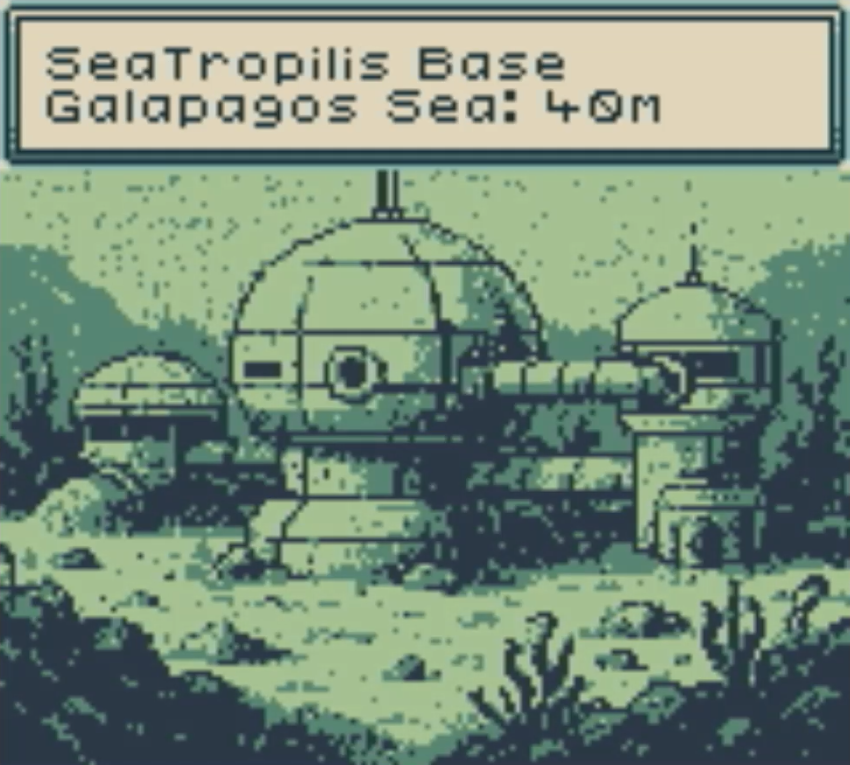
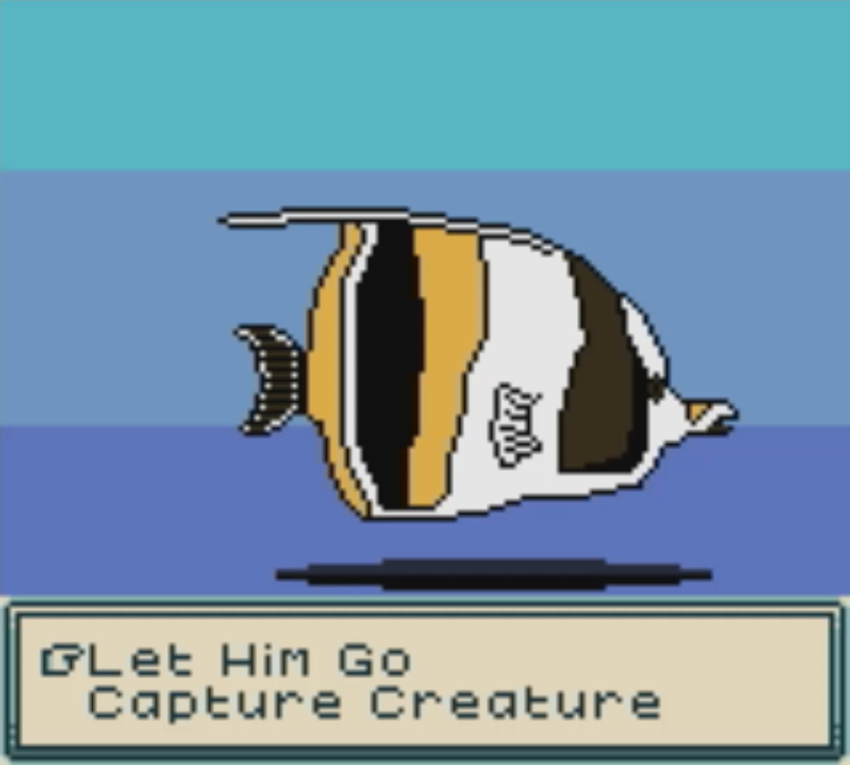
One of the many ideas that I had in my had was to develop a game about underwater exploration. There have been very few games that I’ve experienced where the player gets a realistic underwater experience. Having been inspired by an old Hanna Barbera cartoon SeaLab 2020 and Sci-Fi shows like SeaQuest DSV and diving games like Everblue on PS2 and Aquanauts Holiday on PS3 I started on a project of an underwater RPG that allows the player to live out a unique fantasy of living and working in an underwater base 40 m below the surface of the ocean. I started off using basic tilesets and sprites that I downloaded from itch.io and created a story that I would like to live out. It wasn’t very long before the ideas I had driven me to start making my own custom pixel art. Before I knew it I have been finding a hidden passion and talent for pixel art. The game is called SeaTropilis and I have been working on it for over a year now, on and off. It has gone through over 35 revisions and has evolved in scope and complexity over that time. I am really happy with the results so far, which can be downloaded in the form of a playable prototype GBC ROM file.
It won’t be long now before I get to the stage where I will have a fully playable, polished demo of the game. This will be when I have fully completed the first “dungeon” (which is actually a cavern/cave system) complete with cutscenes, enemies, boss, items, leveling up and story progression. After that time I am seriously considering funding the rest of the game through a Kickstarter campaign. If people are as excited about getting this game to a physical form as I am then it will be my pleasure to be able to deliver this unique game to the retro gaming community. If you are interested in reading more about my journey in pixel art as an indie game dev then I highly recommend reading my latest dev log on the SeaTropilis section of my itch.io webpage.
Relevant Links
- SeaTropilis itch.io webpage [https://x-avy.itch.io/seatropilis] Download SeaTropilis Playable Proto Version
- SeaTropilis Devlog #4 [https://x-avy.itch.io/seatropilis/devlog/1567987/seatropilis-devlog-4-designing-gbc-battle-scenes] Learning to Draw Pixel Art for SeaTropilis
Share this post: on Twitter on Facebook

